


Quick Verdict: Which Leica Q3 Should You Buy?
The main difference is the lens. Choose the Leica Q3 (28mm) for travel, architecture, and capturing wide environmental scenes. Choose the Leica Q3 43 (43mm) for portraits, candid street photography, and a distortion-free “normal” perspective that mimics the human eye.
For years, the Leica Q series was defined by a single, wide-angle lens. But with the release of the Leica Q3 43, photographers now face a tough choice: stick with the classic 28mm or move to the new 43mm “normal” focal length.
Both cameras are high-end, fixed-lens mirrorless tools designed for premium image quality. This article breaks down which version is better suited for your street photography style.
The Shared Core: 60 Megapixels of Detail
Before looking at the lenses, it is important to note that both cameras share the same powerful ‘heart.’ We covered this sensor’s dynamic range extensively in our full Leica Q3 review, but the short version is: it captures 60 megapixels of incredible detail.
Key shared features include:
- Triple Resolution Technology: Shoot at 60, 36, or 18 megapixels depending on your needs.
- Weather Sealing: Both cameras are splash and dust-resistant, making them safe to use in light rain
- High-End Build: German engineering with a tilting touchscreen for shooting at difficult angles.
- 8K Video: Both models support ultra-high-definition video recording (note: there is a substantial crop when shooting in 4K or 8K).
The Original Leica Q3: The 28mm Wide-Angle View
The original Q3 features a 28mm f/1.7 Summilux lens. In street photography, this focal length is known as a “classical wide-angle.”
Why choose the 28mm?
- Fit More in the Frame: It is ideal for landscapes, large buildings, and busy city streets where you want to capture the whole scene.
- Low Light Performance: With a slightly wider aperture of f/1.7, it lets in more light than the 43mm version, which is helpful in dark environments.
- Versatile Cropping: Due to the 60 megapixel sensor, you can digitally crop the image to 35mm, 50mm, 75mm, or 90mm equivalents and still have a sharp photo.
The New Leica Q3 43: The “Normal” Perspective
The Leica Q3 43 uses a 43mm f/2 APO-Summicron lens. This is considered a “normal” focal length because it closely matches how the human eye naturally sees the world.
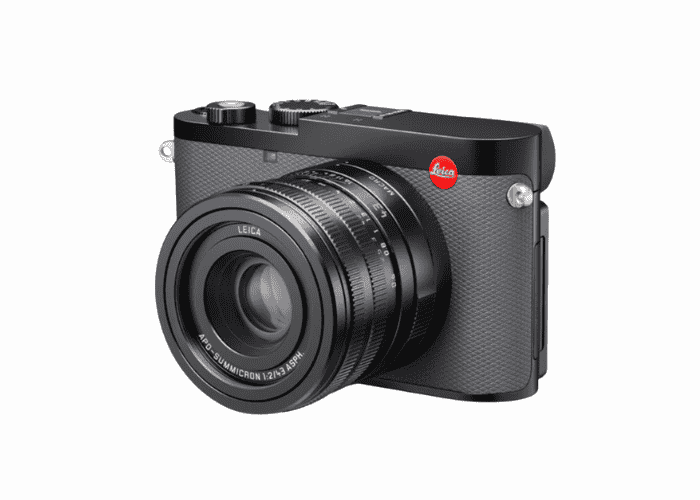 Why choose the 43mm?
- Natural Look: The 43mm length is exactly the diagonal measurement of a full-frame sensor. Distances and proportions are reproduced without distortion.
- Superior Sharpness (APO): This is an APO (Apochromatic) lens-Leica’s designation for its highest-quality glass. It provides extreme sharpness, high contrast, and accurate colours from edge to edge.
- Better for Portraits: It offers a shallower depth of field for beautiful background blur (bokeh), making it superior for people and reportage.
- Extended Reach: The digital crop on this model starts at 43mm and can go all the way to 150mm, giving you much more “zoom” for distant subjects.
Leica Q3 vs. Q3 43: Specs Comparison
| Feature | Leica Q3 (Original) | Leica Q3 43 |
| Focal Length | 28mm (Wide) | 43mm (Normal) |
| Max Aperture | f/1.7 | f/2.0 |
| Lens Type | Summilux | APO-Summicron |
| Digital Crop | Up to 90mm | Up to 150mm |
| Weight | 740g | 794g |
| Body Accent | Black Leather | Grey Leather |
Which One is Best for Street Photography?
The “best” camera depends on your personal shooting style. Here is the breakdown:
Choose the Leica Q3 (28mm) if
- You love the “wide” look and want to capture the entire environment around your subject.
- You are a travel photographer who wants one lens that can handle architecture, landscapes, and group shots comfortably.
- You need maximum low-light performance (f/1.7 aperture).
Choose the Leica Q3 43 (43mm) if
- You prefer candid portraits or a more focused, cinematic look.
- You want to isolate subjects without the distortion of a wide-angle lens.
- You value “APO” lens perfection and edge-to-edge sharpness over a wider field of view.
Final Verdict on Leica Q3 vs Leica Q3 43
Both cameras are luxury investments, costing between $4,500 and $5,000. While the bodies are nearly identical, the 43mm version offers a unique “normal” perspective that many photographers find more pleasant for daily use.
The “Window vs. Magnifying Glass” Analogy:
Choosing between these two is like choosing between a wide-angle window and a magnifying glass. The 28mm window allows you to see the entire garden at once, while the 43mm magnifying glass enables you to focus on the beauty of a single flower with greater clarity and detail.
Ultimately, Leica has provided two different “flavours” of the same world-class camera. If you already own the 28mm version, rest assured that accessories like the wireless charging handgrip work perfectly on the new 43mm model as well.