


This is my honest guide on how to increase blog traffic. I had a blog with a Domain Rating of 70 and zero traffic.
Most people would think that is a dream starting point. High DR means strong backlinks. Strong backlinks mean rankings. Rankings mean traffic. That is not how it works.
I learned this the hard way. The DR was real. The links were real. But the content had nothing to do with what people were actually searching for. Little organic traffic. Zero money.
Then I started targeting keywords with real volume in topics I actually knew well. Traffic climbed to 11k. Things were moving in the right direction.
Then life got in the way. Higher priority work took over. I stopped publishing. Traffic dropped to 200-300 a month. And then I forgot to renew the domain. It expired.
A few months later, I thought, let me give it one more shot. I had time. I set a simple target: 4k traffic in 3 months. If it works, great. If not, at least it is a portfolio piece.
It did better than expected. In 2 months, traffic spiked to 33k. Verified on Ahrefs.
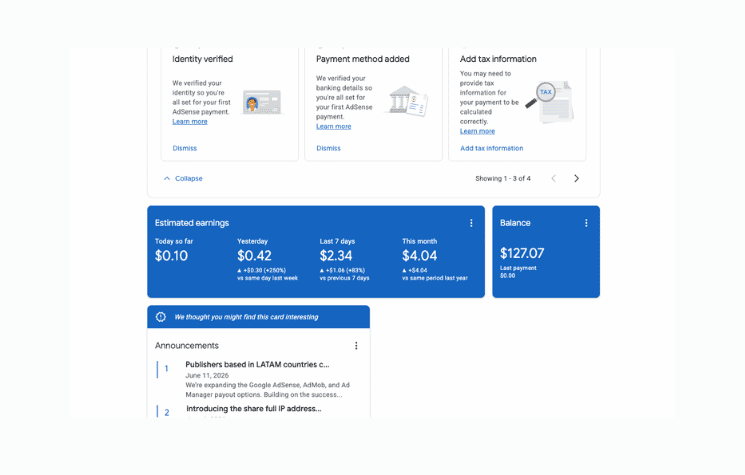
That is when AdSense income started — anywhere from $1 to $24 a day. Sponsored content from tech and SaaS companies started coming in once or twice a month.
This article covers exactly how I increased blog traffic from scratch and turned it into income. No paid tools. No shortcuts.
DR Means Nothing Without the Right Content
A lot of people chase Domain Rating like it is the finish line. It is not even the starting line.
DR tells Google your site has authority. It does not tell Google what your site is about. And if Google does not understand your topical relevance, it will not rank you for anything useful.
My blog had authority built from WordPress themes I created years ago as a junior developer. The backlinks were legitimate. But the content was scattered and not targeting anything with clear search intent.
I had to build topical authority from scratch. That meant writing about tech, blogging, SEO, and tools consistently, in depth, in a way that actually helped readers.
Once the content matched the authority, things started moving fast.
How I Find Topics Worth Writing About
Most people start with a keyword tool and chase volume. That is the wrong starting point.
Here is what I actually do.
Find competitors and study what they rank for
Pick 2-3 blogs in your niche that are at a similar level to yours. Not the giants. Sites you can realistically compete with. Put them in Ahrefs and look at their top-ranking pages.
Now ask yourself: is this topic relevant to my audience? Can I write something better or different? If yes, add it to your list.
This is how you find real opportunities instead of guessing.
Do not ignore zero-volume keywords
Ahrefs will show 0 volume for a lot of keywords. Do not skip them automatically.
Search volume data is an estimate. It is often wrong, especially for long-tail keywords. A keyword showing 0 volume can still bring consistent traffic if enough people are searching variations of it.
Long-tail keywords — the specific, multi-word phrases — are where new blogs win. They are less competitive, more targeted, and often convert better.
Do not play a game you cannot win
This is the most important thing I learned.
Every niche has keywords dominated by sites with DR80+, millions of backlinks, and entire teams writing content. If you try to rank for those keywords with a new or mid-authority blog, you will lose. Every time.
The smart move is to find the gaps. Topics where big players have thin content. Questions they have not answered well. Angles they have not covered. Niche variations of broad topics.
Write those. Win the fights you can actually win.
Some topics have low-quality traffic — write them anyway
Not every article will bring high-intent readers. Some keywords attract people who will never buy anything or click an ad.
Write them anyway if they are relevant to your niche. They build topical authority. They bring internal linking opportunities. And sometimes a low-intent article brings unexpected traffic that leads to higher-intent pages on your site.
The Only Thing That Actually Matters: Helpful Content
I tried a lot of things in the early days. Keyword stuffing. Fancy introductions. Long articles padded with fluff just to hit a word count.
None of it worked. And I kept doing it because that is what everyone was telling me to do.
What actually worked was simple. Writing content that genuinely answers what someone is searching for. No filler. No vague tips. Just real, useful information a reader can act on.
Google’s own guidelines describe exactly this. They want content written for people, not algorithms. Expertise, clarity, real answers. That is not a ranking trick. That is just good writing.
SEO did not teach me how to game Google. It gave me direction. It told me which questions people are asking and how often. My job was to answer those questions better than anyone else.
That is the whole strategy. Nothing more.
How to Track What Is Working
Writing articles is only half the job. You need to know what is ranking and what needs more work.
I use two free tools for this.
Google Search Console shows you exactly which keywords your pages are showing up for, what position you are in, and how many clicks you are getting. Check it regularly. If a page is ranking on page 2 or 3 for a keyword, that is a signal — add more depth, improve the content, and it can move to page 1.
Ahrefs free version gives you a snapshot of your DR, backlinks, and top keywords. Enough to track progress without paying.
The process is simple. Publish. Wait 4-8 weeks. Check Search Console. See what keywords the article is picking up. If a keyword is getting impressions but low clicks, improve the title and meta description. If it is ranking but the content is thin, expand it.
Do not obsess over rankings weekly. Give content time to settle, then act on the data.
Add Your Own Experience — It Is Your Biggest Asset
Anyone can rewrite what is already ranking. That content exists everywhere.
What nobody else has is your experience. Your specific mistakes. Your actual numbers and perspective after doing this for years.
That is what makes content rank in 2025 and beyond. Google is actively trying to surface first-hand experience over generic rewrites. They call it E-E-A-T: experience, expertise, authoritativeness, trustworthiness.
When I write about growing a blog, I can reference real traffic numbers, real income figures, a domain that expired and came back. Nobody else has that exact story.
Find your version of that. Add it to every article. It is the difference between content that blends in and content that ranks.
How I Started Making Money
Once traffic came in, monetization followed naturally.
The blog is in the tech and SEO space. Two income streams opened up:
Display ads pay well in this niche. Once you cross traffic thresholds, ad networks generate passive income on every pageview. I was making $1 to $2 a day from AdSense alone. I also tested other networks. Here is my experience comparing Mediavine Journey vs AdSense if you want to know which one is worth it.
Sponsored content is where the real money is. Companies in tech and SaaS want placements on sites with real authority and a relevant audience. A DR70 blog in the tech niche is genuinely valuable to them.
I listed the site on Collaborator.pro as a publisher. Orders started coming in. Buyers do not just look at traffic numbers. They look at DR, niche relevance, and whether the audience matches their product.
Once or twice a month, sponsored content orders come in. That adds up.
What I Would Do Differently
I would focus on topical depth earlier.
One article in a niche does not build authority. Ten articles covering a topic from every angle do. Google wants to see that you understand a subject completely, not just that you wrote one good post about it.
Pick a niche. Go deep. Answer every question a reader in that niche might have. That is how you build topical authority, and that is what makes DR actually work for you.
Wrapping Up – How to Increase Blog Traffic
All of this 33k traffic, AdSense income, sponsored content happened without a single paid tool.
Here is the short version:
- High DR without relevant content does nothing
- Find competitors at your level and study what they rank for
- Do not ignore zero-volume keywords — tools are often wrong
- Do not compete for keywords where big sites always win — find the gaps
- Helpful content is the SEO strategy, not a separate thing
- Track with Search Console, improve what is almost ranking
- Add your real experience — it is what separates you from everyone else
- Monetization becomes easy once the right audience finds you
You do not need expensive tools and a perfect keyword strategy. You need to understand what your reader actually needs and write that, clearly, without wasting their time.
That is it. That’s all about how to increase blog traffic in a real and sustainable way.